By Kakhi Jordania
The First Encounter
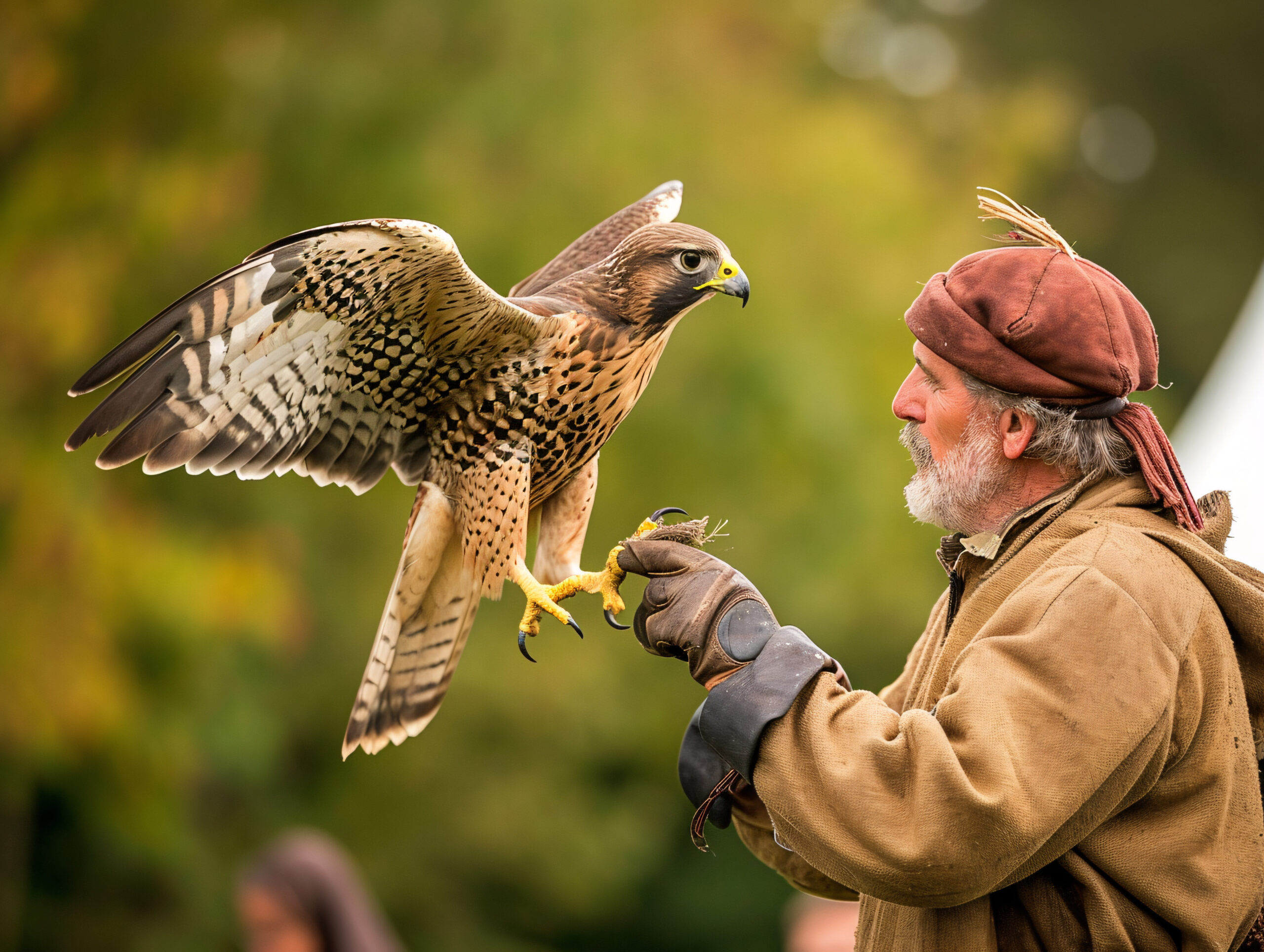
The first time I held a falcon on my glove, I felt a mix of excitement and fear. Its eyes were sharp, its talons strong, and yet there was a calm intelligence in its gaze that instantly captured me. That moment was the beginning of a lifelong lesson about trust, patience, and respect. In falconry, the bond between human and bird is unlike any other relationship in the natural world. It is built slowly, nurtured carefully, and earned every day.
Holding a bird of prey is not about control. It is about connection. From that first encounter, the bird communicates in ways that are subtle but unmistakable. Its body language, its movements, and even the way it responds to your voice reveal its feelings. Learning to read these signals is the foundation of trust, and without trust, falconry is impossible.
Learning Patience
Trust on the glove is never immediate. A young falcon will test your patience, exploring boundaries and asserting its independence. It may ignore your commands, fidget, or attempt to fly away. Each challenge is an opportunity to practice patience, to listen, and to adjust your approach.
For me, these lessons extend far beyond falconry. They have shaped how I interact with people, how I approach difficult situations, and how I understand relationships. Working with birds teaches humility. You quickly learn that forcing cooperation only damages trust. Instead, you must earn it through consistency, care, and respect.
Communication Without Words
The beauty of the human-bird bond lies in its subtlety. Birds of prey do not speak our language, but they communicate with precision. The tilt of a head, the flutter of feathers, or a shift in stance can tell you more than words ever could. Learning to recognize and respond to these signals is a profound exercise in empathy.
When a falcon trusts you enough to sit calmly on your glove, it is offering its vulnerability. That moment carries weight. It is a quiet promise between human and bird, a mutual understanding that neither will betray the other. This trust is fragile and must be maintained through daily care and attention.
Building the Bond
Building a bond with a bird of prey requires more than feeding it or training it to hunt. It involves understanding its personality, its moods, and its needs. Some birds are bold and curious, while others are cautious and reserved. Each one demands a different approach, and each one teaches unique lessons about patience, adaptability, and observation.
Daily routines—feeding, exercise, and training—become rituals that strengthen the connection. The bird learns to recognize you as a source of safety and guidance. In return, you learn to anticipate its behavior, respect its limits, and celebrate its strengths. Over time, this relationship deepens, evolving into a partnership based on mutual respect rather than dominance.
Trust and Conservation
The lessons of trust in falconry have implications beyond the glove. As a conservationist, I have found that the same principles apply to protecting birds in the wild. Understanding a species’ behavior, observing its habits, and respecting its needs are essential for successful conservation. The bond formed in falconry fosters a profound appreciation for the bird’s life and its role in the ecosystem.
Through programs that rehabilitate injured raptors and release them back into the wild, I have seen firsthand how trust and care can make a difference. Birds that are treated with respect recover more quickly and are more likely to thrive once released. The human-bird bond teaches us that patience, understanding, and empathy are crucial not only for training but for preservation.
Teaching the Next Generation
One of the most rewarding aspects of falconry is sharing this bond with younger generations. When children hold a bird for the first time, they experience trust in its purest form. The bird responds to calmness and patience, rewarding them with stillness, focus, and sometimes a brief connection that feels almost magical.
These experiences teach responsibility, empathy, and respect for life. They help children understand that relationships are built on trust, whether with animals or people. Watching a young person develop confidence and care while interacting with a bird is a reminder of why falconry is more than a tradition. It is a tool for teaching values that last a lifetime.
A Partnership of Respect
At its core, the human-bird bond in falconry is about respect. The bird is not a possession or a tool. It is a partner with instincts, intelligence, and agency. Trust grows when the human recognizes these qualities and responds with consistency and care. Every successful hunt, every calm flight, and every landing on the glove is a testament to that trust.
I have spent decades watching birds take to the sky and return to my glove. Each flight is a reminder of the delicate balance between freedom and guidance, independence and partnership. The trust on the glove mirrors a broader truth: meaningful relationships, whether with humans or animals, cannot be forced. They must be earned, nurtured, and honored.
Conclusion
Falconry teaches lessons that extend far beyond the mountains and valleys of Georgia. Trust on the glove is a daily practice in patience, observation, and empathy. It is a partnership that requires care, understanding, and respect.
Through this bond, we learn not only about birds but about ourselves. We discover humility, patience, and the joy of connection. Whether for teaching children, rehabilitating injured birds, or simply experiencing the thrill of a falcon in flight, the trust between human and bird remains at the heart of falconry.
In the end, holding a bird on your glove is more than a skill. It is a relationship, a responsibility, and a privilege. It is proof that when trust is earned, the bond between species can be as profound as it is enduring.