By Kakhi Jordania
A Lesson from the Sky
When I was a boy growing up in Tbilisi, my grandfather often took me to the hills outside the city to watch the falcons and eagles circle above the mountains. He would tell me, “If you want to understand freedom, watch a bird in flight.” Those days shaped the person I am now. They taught me patience, respect, and a deep love for nature.
Today, I try to pass that same lesson on to the next generation. But the world children grow up in now is very different. Many spend more time looking at screens than at the sky. They know more about cartoon animals than the real ones living just outside their cities. As a falconer and conservationist, I believe birds of prey have a powerful way of reconnecting children to the natural world. Through these birds, we can teach lessons about life, responsibility, and our shared duty to protect the environment.
The Magic of First Encounters
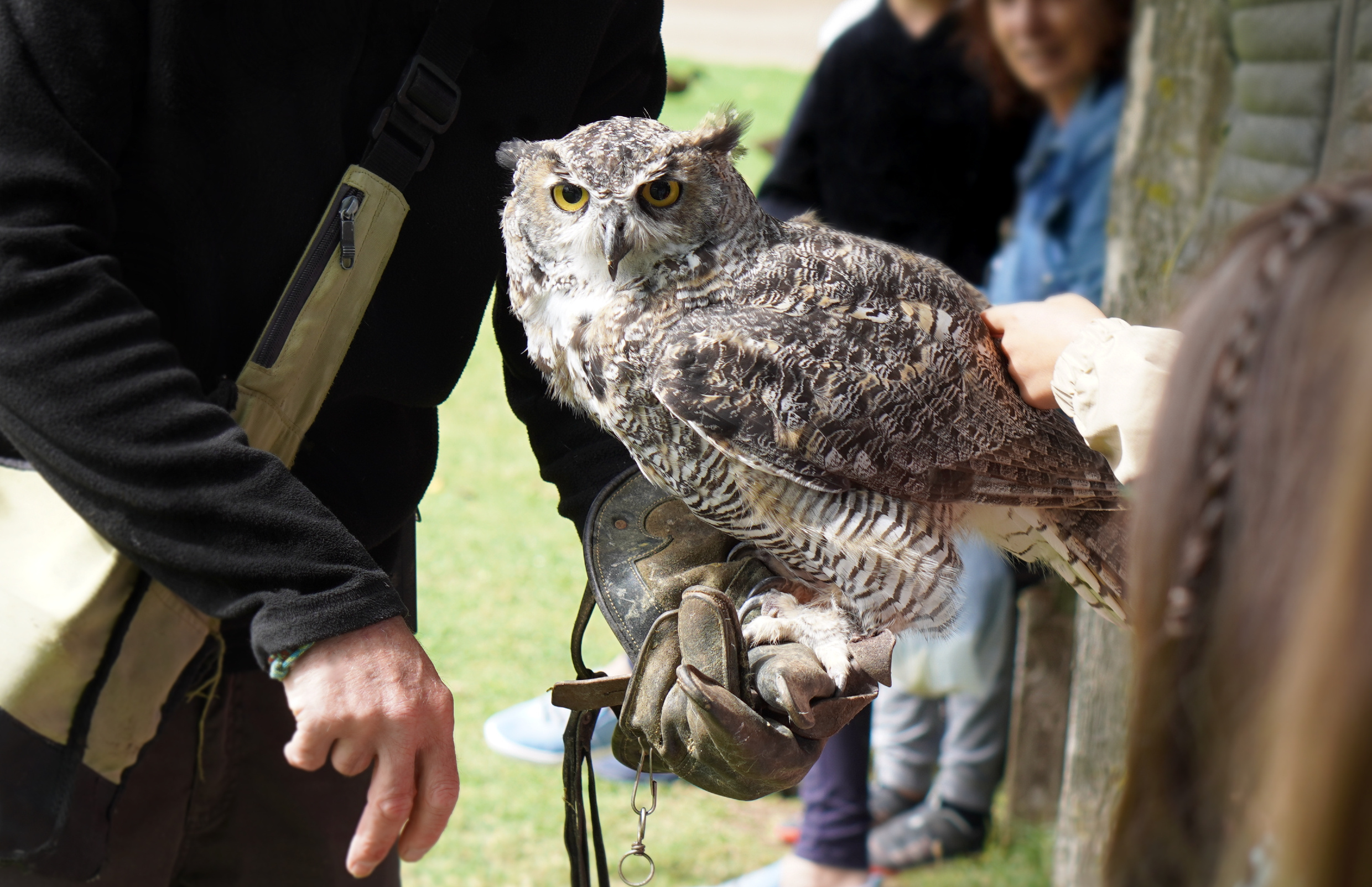
Every time I bring a falcon or owl to a classroom or community event, I see the same reaction. The moment a child sees the bird spread its wings, their eyes light up with wonder. Some are nervous, others are fascinated, but all are completely engaged. These moments are special because they spark curiosity, and curiosity is the first step toward caring.
Children may not remember every fact about a species, but they will remember how they felt when a hawk looked directly at them or when they heard the powerful whoosh of wings in flight. That emotional connection is the seed of conservation. It turns learning into something personal.
At our educational programs through the Caucasus Raptor Conservation Initiative, we invite children to see birds of prey up close, learn about their habitats, and understand the challenges they face. We talk about how pollution, deforestation, and illegal hunting threaten their survival. But we also show them what they can do to help, from keeping their environment clean to protecting local nesting areas.
Learning Through Responsibility
Falconry has always been a tradition built on respect and responsibility. A falconer must care for their bird every day—feeding it, training it, and ensuring it stays healthy. These tasks require discipline and patience, qualities that are becoming rare in our fast-paced world.
When I teach children about falconry, I do not focus only on technique. I focus on character. I explain that a falcon does not obey out of fear but out of trust. You cannot rush the process or take shortcuts. If you are careless or impatient, the bird will not return. This teaches young people an important lesson about relationships—not just with animals, but with people as well.
In Georgia, some schools have begun to include short environmental workshops inspired by falconry principles. Students learn that caring for nature is not a one-time project but a lifelong practice. It is about consistency, awareness, and respect. The values learned through working with birds extend into every part of their lives.
Blending Tradition and Science
One of the most exciting parts of my work is combining our traditional knowledge of falconry with modern conservation science. Children are naturally curious about technology, so when we show them how we use satellite tracking to follow migratory birds, they are instantly hooked. They love seeing the maps with lines tracing across continents, realizing that the bird they saw released in Georgia may be flying over Africa or the Middle East weeks later.
This approach helps them understand the global nature of conservation. It shows that protecting birds of prey is not just a local concern—it connects people across borders. It also teaches children that technology, when used wisely, can be a tool for good.
When young people see that ancient traditions like falconry can work hand in hand with modern science, it gives them hope that heritage and progress can coexist. They begin to see conservation not as an obligation, but as a shared adventure between generations.
The Power of Storytelling
Children love stories, and birds of prey offer some of the most fascinating ones. Every eagle, falcon, or owl has its own character and history. When I tell children about an injured eagle we rescued and released, they are captivated. They want to know what happened next. Did it survive? Did it find a mate?
Through these stories, I teach them empathy. They begin to see animals not as distant creatures but as living beings that need care and protection. Some even start writing essays or drawing pictures about the birds they meet. Others come back to volunteer or bring their friends. It reminds me that small encounters can have a lasting impact.
Building a Future of Stewards
I believe that conservation is not truly successful unless it inspires the next generation to continue the work. The challenges facing our environment are growing, and we need young people who not only understand the issues but feel personally connected to them. Birds of prey are perfect ambassadors for this cause. They are powerful, beautiful, and deeply symbolic of freedom and balance.
Each time I watch a child release a rehabilitated bird back into the wild, I see a moment of transformation. The child’s face fills with awe as the bird takes off into the sky. It is a moment of joy and understanding—a reminder that nature’s beauty depends on our care.
We must nurture these experiences. Schools, communities, and families should create opportunities for children to spend time outdoors, to learn by observing and doing. Conservation cannot be taught only in books; it must be lived and felt.
Conclusion
Falconry has always been more than hunting. It is a philosophy of respect between human and nature. Today, that philosophy is more relevant than ever. Birds of prey can teach our children patience, compassion, and the value of coexistence.
When I see a young student hold a falcon for the first time, I feel hopeful. In that quiet moment, there is connection and understanding—a bridge between the past and the future. These children will become the next guardians of our planet. And if we teach them well, they will keep the skies filled with wings for generations to come.